Hydrogen Lab
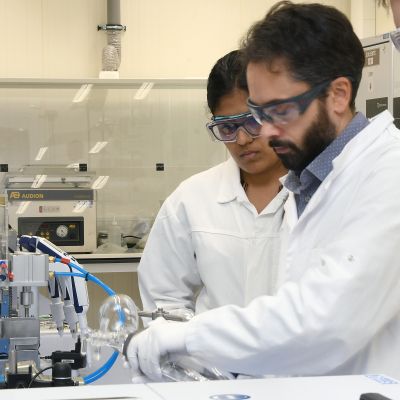
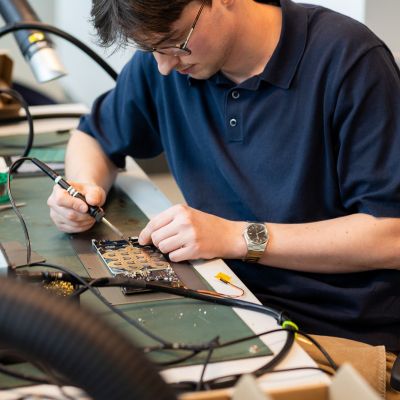
In the EnergyVille/IUMAT Hydrogen Lab, researchers are working on a variety of technical bottlenecks to optimise PEM electrolysers for mass deployment and to make this technology more economically viable.
Society relies heavily on hydrogen for manufacturing fertilizers (ammonia), refining metals, and producing chemicals. Today, most of this hydrogen is produced from fossil fuels. By using renewable electricity to split water into green hydrogen and oxygen, proton-exchange-membrane (PEM) water electrolyzer systems enable carbon-free energy storage, help decarbonize heavy industry, and pave the way for a sustainable global energy economy.
Unlike older alkaline systems, PEM electrolyzers feature a rapid dynamic response time and benefit from a compact design. They can start and stop almost instantly, making them uniquely suited to pair with fluctuating power sources like wind and solar. This allows us to capture and store surplus renewable energy that would otherwise be wasted during peak generation periods.
Take a tour of this lab
Take a look around our lab and discover how we conduct research into innovative energy solutions.
Who can use the Hydrogen Lab?
- PEM Electrolyzer Stack and System Manufacturers
- Membrane and Functional Materials Manufacturers
- Catalyst, Membrane Coating, and MEA Manufacturing Companies
- Electrolyzer Test, Engineering, and Balance-of-Plant Developers
What is the purpose of the Hydrogen Lab?
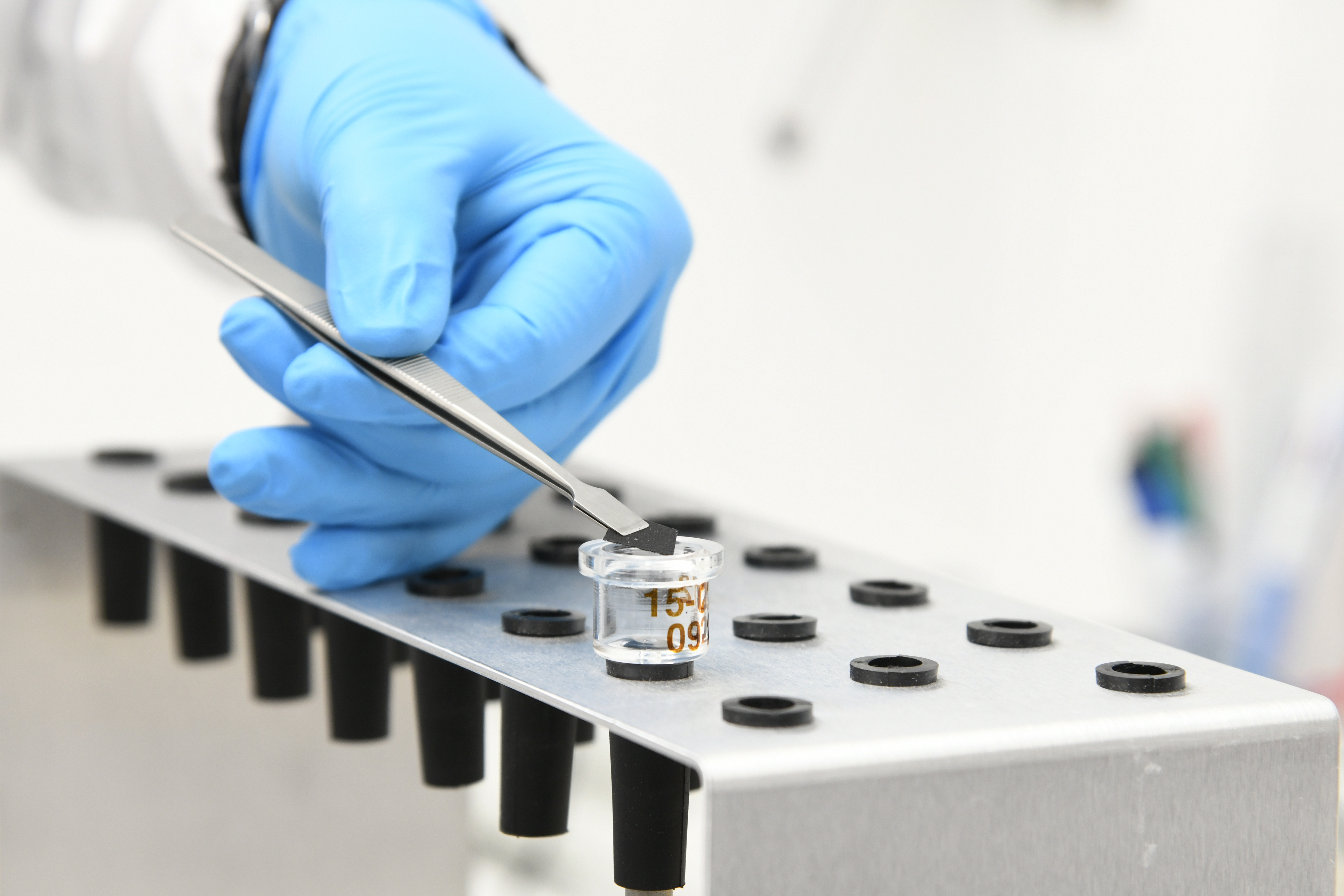
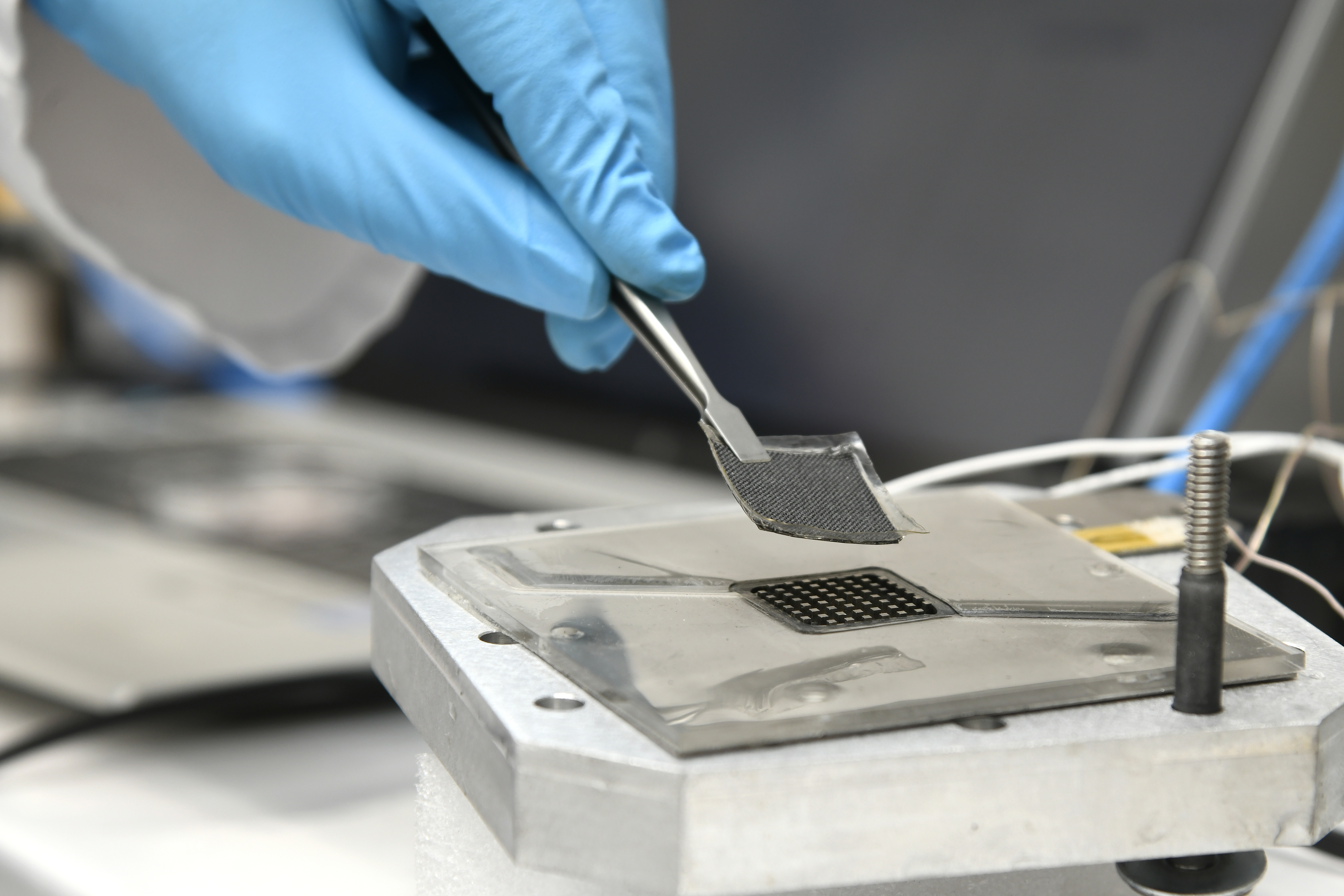
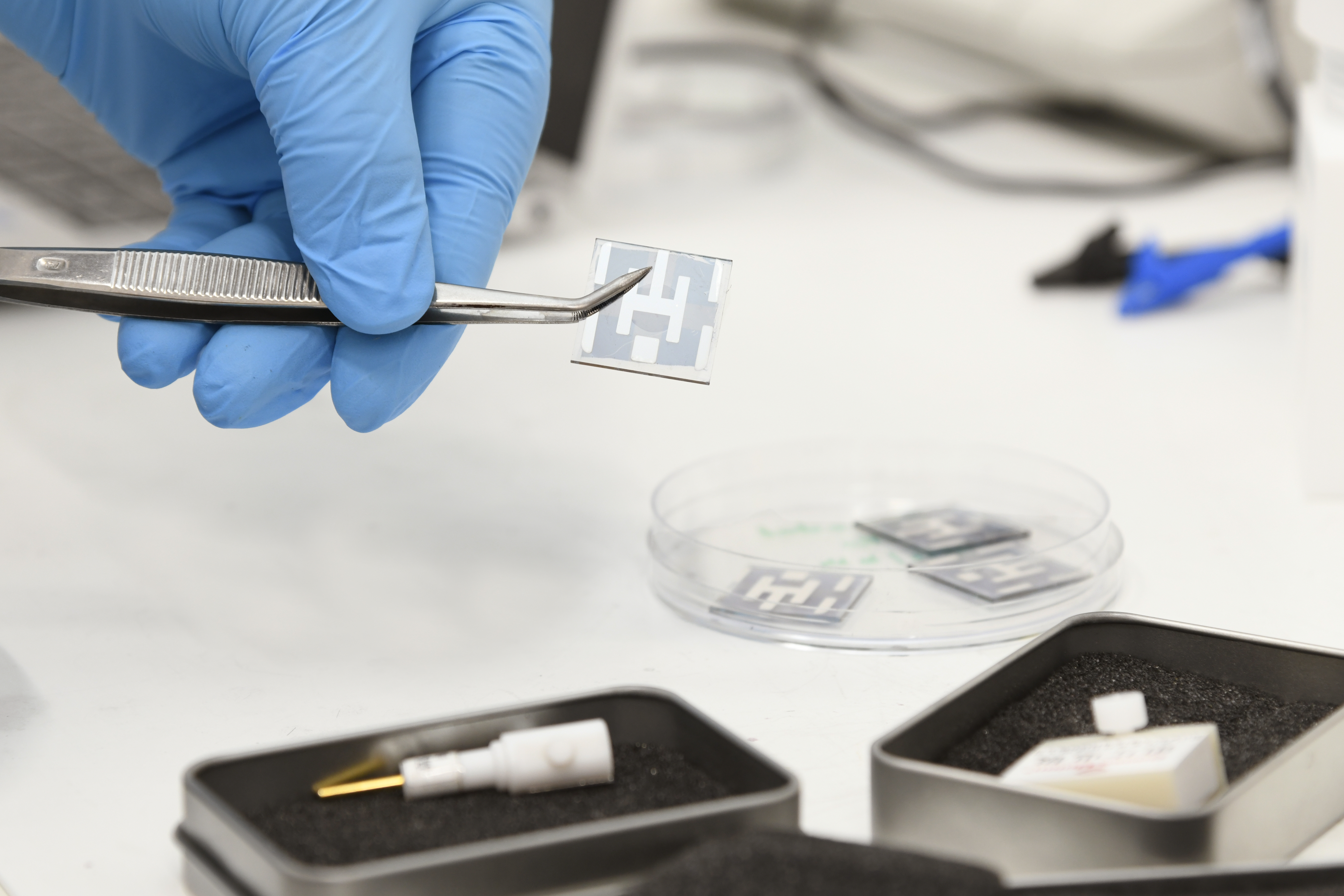
- The preparation and advanced characterisation of the PEM electrolyser cell and components.
- The development and evaluation of new materials (such as catalysts) and components (such as transport layers and flow fields) for PEM electrolysers.
- The formulation and building the membrane-electrode-assembly (MEA) at controlled temperature and pressure.
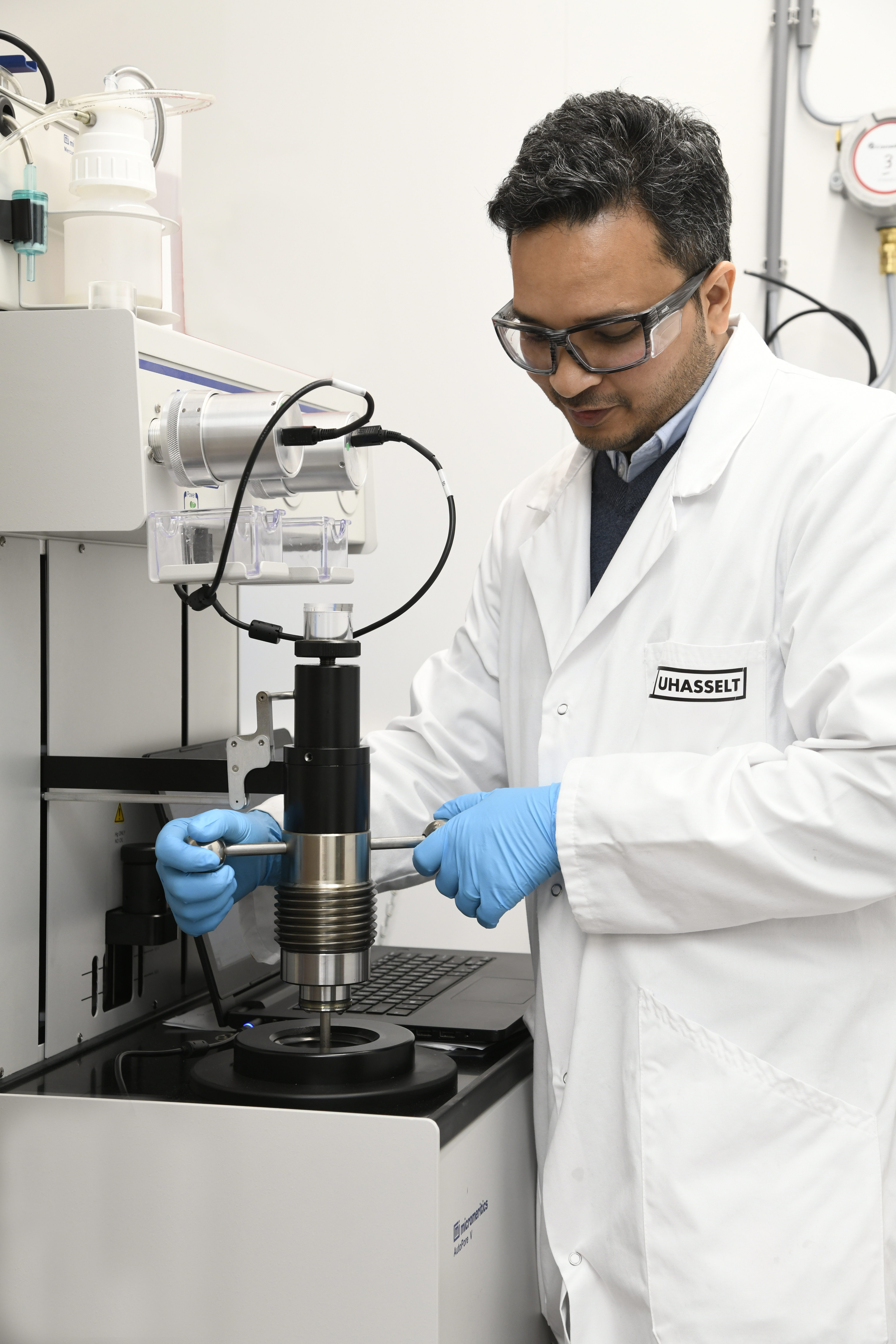
- Characterisation of the microstructural details of the electrodes (mercury porosimetry).
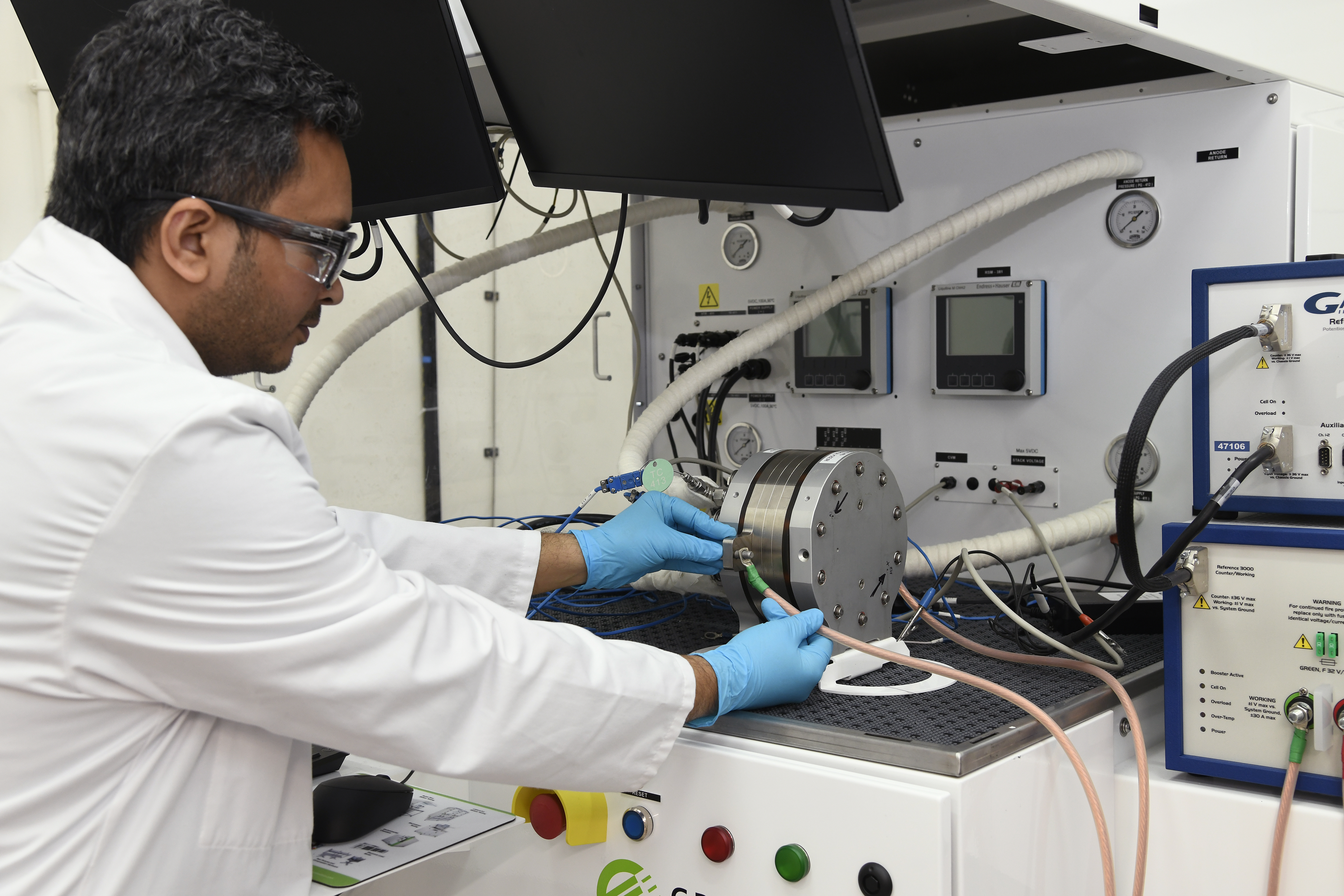
- Testing the performance of cells using an automated 500W PEM electrolysis system.
- To evaluate the electrochemical performance, efficiency and durability of cell components for electrodes with a surface area of up to 50 cm².