
GALILEO identifies room for action in industry
Belgian industry is facing a rapid succession of challenges. Energy prices remain volatile, grid congestion is increasing, and the need to electrify is becoming more urgent. At the same time, companies are expected to decarbonise faster. With GALILEO, EnergyVille approaches the question from a different perspective and starts from a practical reality: what can companies already do today, and what is still holding them back from making their energy use smarter and more flexible?
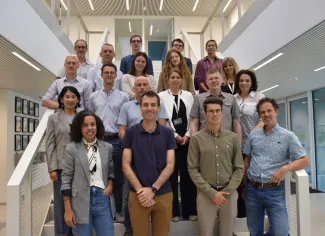
When people talk about decarbonising industry, the discussion often focuses on flexibility, electrification, energy efficiency and grid management. In practice, however, those challenges tend to look very different. Companies have to deal with production schedules, investment cycles, internal priorities and regulatory frameworks that do not always keep pace. GALILEO starts from that more stubborn reality. Working with companies such as Tessenderlo Group, Nyrstar, Aperam, Tiense Suiker and LCL Data Centres, EnergyVille is examining how much flexibility already exists in industrial energy use, and why unlocking it in practice is often less straightforward than it seems on paper.
“Many studies on the future of industry take a topdown approach,” says Helena Gerard, project manager at EnergyVille/VITO. “Within GALILEO, we do the opposite. We go directly to companies and ask: what are you running into today, what makes things difficult, and where do you see opportunities yourselves?”
Through workshops with the companies and the project team, more than 80 different barriers were identified. Some related to technology or investment needs, others to regulation or internal organisation.
“You may have a strong decarbonisation project,” Gerard says, “but if a plant manager is mainly assessed on maximising production, internal support cannot be taken for granted. Those are exactly the kinds of barriers you only uncover by talking directly to companies.”
This approach makes GALILEO fundamentally different from a conventional research project. Rather than staying at a distance, the researchers worked closely with the companies throughout. In addition to technical workshops and regular consultation with company experts, interim findings were continuously tested against operational reality. Over time, that also built trust.
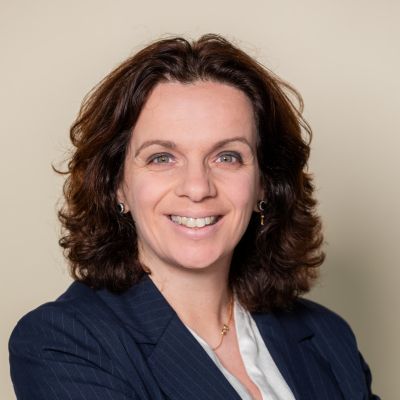
“It has become a true partnership,” Gerard says. “You start to see the companies raising more questions, adding nuance and pointing out factors that need to be taken into account. That is when you realise the project has really started to resonate with them too.”
Building on that practical insight, the team began assessing possible solutions. What value does a battery offer? When does an electric boiler make sense? Can heat demand be organised differently? Is there a business case for putting that flexibility on the market?
Although the participating companies come from very different sectors, some barriers appear repeatedly. That means GALILEO goes beyond a series of individual case studies. It builds a clearer understanding, not of one company’s needs, but of recurring patterns that cut across sectors.
Gerard sees that as an opportunity to shift the tone of the debate. “There is a lot of concern around the state of our local industry,” she says. “That is understandable, but we also want to help create a more constructive dynamic. What is already possible? Which solutions really deliver value? And which obstacles should companies not have to solve one by one, all over again?”
That narrative fits closely with EnergyVille’s broader mission. “We are not traditional consultants,” Gerard says. “We go beyond conventional consultancy, and we are also honest when something does not make economic sense. Companies expect that independence
from us.”
In 2025, GALILEO focused first on mapping the barriers clearly. The next step is to develop the solutions further, and in a third phase to test and translate them into guidance for other companies, sectors and policymakers.