
Collective renovation as a lever for affordable and future-proof neighbourhoods – Lessons from the Living Lab in Genk
How can we prepare existing neighbourhoods for a climate-neutral future? And how can we ensure that renovation is not only energy-efficient, but also affordable and socially fair?
Within the framework of the European oPEN Lab project, researchers Erika Meynaerts, Evi Lambie and Pieter Bosmans share the key insights from the Living Lab in Genk. There, residents, local authorities, housing associations and companies work together to explore how collective renovation can become a powerful driver for positive energy neighbourhoods.
Below we summarise the key insights.
Background
The oPEN Lab project, funded under the European Horizon 2020 programme, aims to accelerate the transition to so-called Positive Energy Neighbourhoods. These are neighbourhoods where buildings and public spaces function together as a single smart energy system, maximising energy efficiency, renewable energy production and local energy exchange.
Living Labs have been set up in three cities — Genk, Pamplona and Tartu. In these real-life neighbourhood contexts, innovative renovation measures, energy technologies and collective systems are tested together with residents.
This document focuses on the technical insights from the Living Lab in Genk, with particular attention to the collective renovation of existing homes.
What is a Positive Energy Neighbourhood?
A Positive Energy Neighbourhood (PEN) is an area where buildings, infrastructure and public space are intelligently connected. The neighbourhood uses energy very efficiently, produces renewable energy locally and, on an annual basis, does not generate additional greenhouse gas emissions from energy use.
Thanks to technologies such as solar panels, heat pumps, energy storage and smart control systems, locally generated energy can be used immediately or shared within the neighbourhood. Surplus energy can be exchanged through energy communities.
Neighbourhoods are an ideal scale to address technical, social, legal and financial challenges in an integrated way. Compared to individual home renovations, a neighbourhood-based approach offers important advantages:
-
Lower greenhouse gas emissions
-
Greater energy security
-
Stronger social cohesion
-
Reduction of energy poverty
-
Better alignment between energy demand and supply in the grid
The Living Lab in Genk
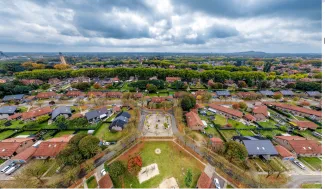
In Genk, work is taking place in two neighbouring districts: New Texas (social housing) and Waterschei-Noord (with many privately owned homes).
In Nieuw Texas, the social housing company Wonen in Limburg is leading a collective renovation trajectory. Renovations are carried out while residents remain in their homes, using prefabricated solutions to minimise disruption and shorten renovation time.
So far, 27 social housing units have been renovated. Through the SmarThor data platform, more than 200 parameters per dwelling are monitored, including energy consumption, indoor climate and system performance.
The first results are promising:
-
The energy demand for heating and hot water has been reduced by about half
-
The indoor climate has improved significantly
-
Residents experience greater comfort
In Waterschei-Noord, the first renovated homes improved from EPC label D or E to label A. Further monitoring will also be implemented there.
These experiences show that collective renovation is technically feasible, but also highlight the need for important policy and structural framework conditions.
Seven key recommendations
1. Lower barriers for collective energy models
Although energy sharing is legally possible, collective systems often face high grid tariffs and administrative costs in practice. Especially smaller projects find that fixed costs put pressure on the business case.
In addition, legal uncertainty about ownership and management of shared installations adds complexity.
Reforming grid tariffs, simplifying administrative procedures and introducing standard contracts are essential to make collective energy models more viable
2. Provide winter protection for all heating systems
Social housing tenants with a budget meter and a heat pump currently do not benefit from the same winter protection as households with natural gas heating. This creates an uneven playing field.
However, heat pumps offer long-term prospects: if electricity prices evolve more favourably than fossil fuel prices, they can become structurally cheaper.
Adapted protection measures and guidance on energy use are necessary to ensure that vulnerable households are not disadvantaged by innovative technologies.
3. Reconcile heritage and innovation through a flexible framework
In neighbourhoods with heritage value, renovation measures such as external insulation or solar panels may conflict with aesthetic regulations.
Experience shows that an objective and flexible heritage framework, developed in dialogue with residents and experts, is necessary to reconcile energy ambitions with architectural coherence.
4. Develop strong one-stop-shop services
Residents need clear, accessible and integrated support.
A neighbourhood-based one-stop-shop model should:
-
Combine technical, financial and social guidance
-
Connect policy, technology and residents
-
Be accessible and provide a clear point of contact
Low-threshold communication increases public support and accelerates the implementation of collective renovation projects.
5. Invest in participation and awareness
Collective renovation only succeeds when residents are actively involved. Participation requires time, resources and professional guidance.
Current support mechanisms focus mainly on investment subsidies (for insulation or solar panels), but process guidance, communication and behavioural change also deserve structural funding.
Proper use of new installations is essential to achieve the intended energy performance and cost savings.
6. Create space for experimentation and learning
Living Labs demonstrate the importance of experimental space within regulations.
Temporary exemptions and pilot projects allow stakeholders to learn what works and what does not. Systematically collecting practical experience helps to adapt regulations and better align them with local realities.
7. Combine supportive policy with strong local collaboration
Policy measures are necessary, but not sufficient. The success of collective renovation depends on:
-
Intensive collaboration
-
Open communication
-
Strong local coordination
-
Trust between stakeholders
The experiences in Genk show that a strong local coordinator is essential to streamline complex processes and keep all actors aligned.
Conclusion
Collective renovation is more than a technical intervention. It is an integrated process in which technology, policy, financing and social innovation come together.
The lessons from the Living Lab in Genk demonstrate that Positive Energy Neighbourhoods are achievable, provided there are targeted policy choices, sufficient room for experimentation and structural support for residents and local stakeholders.
The stronger the interaction between policy and practice, the greater the chance that existing neighbourhoods can evolve into affordable, fossil-free and future-proof living environments.
Interested in learning more?
Discover the full paper Collectieve renovatie van bestaande woningen: lessen uit het Living Lab Genk by Erika Meynaerts, Evi Lambie and Pieter Bosmans. (Dutch only)