
Speakers and Chairs ISOS 16
Han Xu

Han Xu is a Postdoctoral Fellow in Organic Materials for Energy Applications (OMEGA) Lab at King Abdullah University of Science and Technology (KAUST), working under the supervision of Prof. Derya Baran. He completed his PhD in 2024 at KAUST within Prof. Baran’s research group. His research focuses on enhancing the operational lifetime of organic solar cells through innovative material design, interface engineering, and morphology control. He is especially dedicated to improving the intrinsic photostability of materials and understanding how these chemical changes impact device degradation. Han’s work aims to bridge the gap between laboratory-scale performance and real-world applications, accelerating the commercialization of next-generation organic photovoltaic technologies.
Laura Schelhas

Laura Schelhas is the Senior Manager of Strategic Partnerships and Senior Scientist in the Materials, Chemistry, and Computational Sciences Directorate. Laura engages with partners, researchers, and the strategic partnership team on a deep technical level to manage projects on behalf of the Materials, Chemical, and Computational Science Directorate at NREL. Schelhas most recently served as the technical lead for NREL’s $80 million, 10-year partnership with Fortescue. Before NREL, Laura was the deputy division director at SLAC National Accelerator Laboratory. She also has experience working directly with industry representatives through her roles as executive director of both the U.S. Manufacturing of Advanced Perovskites and (formerly) the Durable Module Materials (DuraMAT) consortia. Laura currently serves as the deputy director of the PV Accelerator for Commercializing Technology Center (PACT).
Eugene A. Katz

Eugene A. Katz is a professor at the Ben-Gurion University of the Negev (Israel). He received his MSc degree (1982) in Semiconductor Materials Science and Ph. D. (1990) in solid state physics from the National University of Science and Technology “MISIS”, Moscow. His research interests include studies and development of a wide range of materials and devices for solar energy conversion, such as organic and perovskite-based photovoltaics, concentrator solar cells operated at ultra-high solar concentration (up to 10,000 suns), as well a history of science. He has published more than 150 peer-reviewed papers on these topics (including those in Nature Energy, Advanced Materials, Energy & Environmental Science, etc.) as well as a popular scientific book and several articles on science history and fullerene-like structures in nanomaterials, living organisms, and architecture. Based on the latter activity, he has developed and is teaching an interdisciplinary course, “Bridges between fine art and natural sciences: cases of fullerenes, polyhedra, symmetry”. Prof. Katz was awarded the IAAM Medal (by the International Association of Advanced Materials) for outstanding research in New Energy Materials & Technology.
Buyi Yan

Buyi Yan is co-founder and CTO of Hangzhou Microquanta Semiconductor Co., Ltd., in charge of R&D and production. He is an inventor of more than 300 patents and patents applications. He is enlisted in Forbes Asia and China “30 Under 30” list.
Jean-Baptiste Puel

Jean-Baptiste Puel has been a senior researcher at IPVF for the past nine years, working as an EDF R&D researcher and head of a scientific program. His work focuses on coupling modeling, artificial intelligence, and advanced characterization techniques to analyze the performance and degradation of emerging photovoltaic (PV) technologies. He leads the EASIER program, a dedicated IPVF research initiative comprising around ten researchers focused on these activities.
Based at IPVF—a public-private institute specializing in photovoltaics—the team operates at the forefront of PV research. Their work spans multiple scales, from materials to complete devices, integrating physical modeling, AI, and multi-modal characterization. This holistic approach aims to assess the performance of novel technologies, from materials to devices, as well as to model degradation processes through both accelerated and real-world experiments.
Ji-Seon Kim

/Professor of Electronic Materials, Department of Chemistry, University of Oxford
Professor Ji-Seon Kim is an expert in electronic materials, with a research focus on sustainable molecular semiconductors and emerging electronic systems including mixed electronic/ionic conductors and organic/inorganic hybrids. She joined the University of Oxford in 2025, following her career as Professor of Solid State Physics at Imperial College London.
Her research group explores fundamental science underpinning next-generation optoelectronic devices such as solar cells, photoconversion sensors, synaptic transistors, and biosensors. A key component of her work involves the development of advanced nanometrology tools, particularly vibrational and energetics spectroscopies, critical for these novel materials.
Professor Kim has authored over 250 scientific publications and maintains strong collaborative ties with industry partners, including Samsung Electronics (Korea) and Oninn (Brazil).
Thomas M. Brown

Thomas M. Brown graduated in Physics from University of Rome La Sapienza with 110/110 cum laude with a thesis on crystalline/amorphous silicon heterojunctions. He investigated polysilicon TFTs as a research assistant at Cambridge University Engineering Department (1996/1997). investigated polymer OLEDs for his PhD at the Cavendish Laboratory, University of Cambridge (2001). From 2001–2005 he developed OTFTs and E-Paper as Senior Engineer with Plastic Logic Ltd. In 2005 he was recipient of a ‘‘Re-entry’’ Fellowship awarded by the Italian Ministry of University and Research and is now Full Professor of Organic and Biological Electronics at Tor Vergata University of Rome. Founder (2006) of the Centre for Hybrid and Organic Solar Energy (CHOSE), and Associate Editor of Solar Energy, his current research focuses on indoor photovoltaics, perovskite solar cells, flexible solar cells, and photovoltaic bioelectronics.
Morten Madsen

Expertise in thin-film synthesis, interfaces and device integration for sustainable energy conversion and storage technologies. Finalized in 2009 a PhD within growth of organic nanostructures and thin films at crystalline and applied surfaces, at University of Southern Denmark, SDU. Conducted a postdoc research stay at Prof. Ali Javey research lab, UC Berkeley, California in 2010-2011, working on high performance transistors from III-V nanoscale membranes. Established in 2011 the Organic Photovoltaics (OPV) group at the Mads Clausen Institute, SDU, focusing on the performance and stability of organic and hybrid solar cells, including oxide interlayers, organic and hybrid active layers, thin film interfaces, device integration, degradation mechanisms, device testing and lifetime assessment. Since 2016, this includes also a focus on device scale-up through Roll-to-Roll (R2R) printing and coating technology at the SDU R2R facility. Holds around 100 publications and 2 patents on those topics, and has been main supervisor for 13 PhD students (past and on-going).
Since 2022 Head of the Centre for Advanced Photovoltaics and Thin Film Energy Devices, SDU CAPE, which focuses on thin film photovoltaics as well as on novel devices for energy conversion and storage. The CAPE research centre currently consists of around 20 researchers, including PhD students and engineers. Since 2023, Head of the SDU Climate Cluster Elite Centre on Solar Energy Conversion and Storage, SCC SOLEN, which is an elite centre dedicated to cross-disciplinary research on sustainable thin film devices for solar energy conversion and storage, spanning across 4 different faculties at SDU. Coordinator, principal investigator and work package leader of several European projects that span from research and development to prototype activities with industry, including for example the projects THINFACE, RollFlex, CITYSOLAR, SPOT-IT, EFFECTOR and SUNTEX.
Stéphane Cros

Senior Expert at CEA
Dr Stéphane CROS has a PhD in the field of nanocomposite organic/inorganic materials (ESPCI, Paris, 2002). He joined the CEA in 2004 and he is in charge of stability/lifetime topic in the CEA-LCT laboratory (INES institute) making Perovskite and tandem Silicon/Perovskite solar cells.
Quentin Jeangros

Quentin Jeangros is a materials scientist with a PhD from EPFL (2014, CH). Since 2021, he has been in charge of the group working on perovskite materials and devices at CSEM (Neuchâtel, CH).
Shengzhong Liu
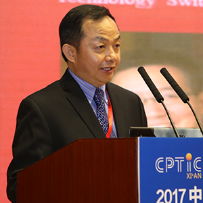
Dr. Shengzhong Liu received his PhD from Northwestern University, USA in 1992. He is an RSC (Royal Society of Chemistry) Fellow. His H-index is 110 and i10-index over 350. Upon completing his postdoctoral research at Argonne National Laboratory in 1994, he joined high-tech industrial research, most notably on solar cells with Solarex/BP Solar and United Solar Ovonic. Professor Liu’s research focus includes nanomaterials, thin film materials, photovoltaic materials and solar cells. His major outcome in basic research has been published in scientific journals, including Science, Nature, Joule, Matter, Science Advances, Nature Communications, Advanced Materials, Energy & Environ. Sci., etc., 80 of them being enlisted in ESI’s “most cited paper” and “hot paper” lists. Many of his major inventions and patents have been converted into commercial technology and products. In 2011, he accepted a full-time professorship by Shaanxi Normal University and Dalian Institute of Chemical Physics, Chinese Academy of Sciences in 2012. He is now the director of Shaanxi Engineering Lab for Advanced Energy Technology, Shaanxi Key Laboratory for Advanced Energy Devices and Institute for Advanced Energy Materials, Shaanxi Normal University and Associate Director of Solar Energy Department, Dalian National Laboratory for Clean Energy. He serves as an associate Editor for NanoSelect. He is also an Editorial Board Member for Advanced Science, ACS Sustainable Chemistry & Engineering, J. Energy Chemistry and Scientific Report. He is selected as the top 1% most highly cited author by RSC and Clarivate Analytics. He is also among the “Top 2% Scientists Worldwide 2022”.
Christoph J. Brabec

Christoph J. Brabec received his PhD (1995) in Physical Chemistry from Linz University, Austria and joined the group of Alan Heeger at UC Santa Barbara (USA) for a sabbatical. He joined the SIEMENS research labs (project leader) in 2001, Konarka in 2004 (CTO), Erlangen University (FAU – Professor for Material Science) in 2009, ZAE Bayern e.V. (scientific director and board member) in 2010, spokesmen of the Interdisciplinary Center for Nanostructured Films (IZNF) in 2013 and became director at FZ Jülich (IEK-11) in 2018. In 2018 he was further appointed as Honorary Professor at the University of Groningen, Netherlands. Since 2023 he is a Fellow of the Royal Society of Chemistry and since 2024 a full member of the Bavarian Academy of Science. His research interests include all aspects of solution processing organic, hybrid and inorganics semiconductor devices with a strong focus on photovoltaics and renewable energy systems. A major research interest are scalable processing technologies allowing to control microstructure formation in disordered semiconductors. A very recent activity explores the limitation of autonomous operating research line for accelerating innovation and inventions in materials
science. His combined scientific and technological interests supported the spin-out of several companies. He published over 1000 articles, thereof over 800 peer reviewed articles, about 100 patents, several books and book chapters and overall received 100.000 citations. His h-index is over 150 and Thompson Reuters HRC lists him for the last years consecutively as a highly cited researcher.
Dr. Chen YANG (David)

David is the CEO of PURI Materials. David holds a Ph.D. in Materials Chemistry from the University of Hong Kong. His expertise spans the development of advanced scientific instrumentation and novel optoelectronic materials. He has served as an external supervisor at Tsinghua University and Southern University of Science and Technology. David has published solar cell research in leading journals such as Angew. Chem. Int. Ed, Chem. Sci., and J. Mater. Chem. C. His current efforts focus on the continuous evolution of advanced testing solutions that adapt to the fast-changing demands of perovskite and tandem photovoltaics.
Yongxi Li
Professor Li Yongxi is a Zhicheng Young Distinguished Professor at the Institute of Functional Materials and Intelligent Manufacturing, Nanjing University. His research centers on performance control and integrated applications of flexible optoelectronic materials and devices, with a particular focus on organic photovoltaics. He has made significant breakthroughs in transparent organic photovoltaic materials and device stability. His work has been published in leading journals such as Nature Reviews Materials, Nature Energy, Nature Photonics, PNAS, Joule, Journal of the American Chemical Society, and Advanced Materials, with more than 60 papers and over 6,500 citations. In addition to academic achievements, he has led and contributed to numerous major corporate R&D projects on photovoltaic devices, driving progress toward industrialization, and holds 18 U.S. and Chinese patents.